
We’re Back With More
In our Unbelief Brief, Iran’s regime has partially restored international internet access after months of isolation, offering ordinary Iranians a fragile lifeline to the outside world even as censorship remains firmly in place. Meanwhile, the Taliban have moved to implicitly permit child marriage through a chilling new decree on divorce and “consent.” In EXMNA Insights we reflect on World Menstrual Hygiene Day and the role religion can play in shaping stigma around women’s bodies, purity, and autonomy.
Unbelief Brief
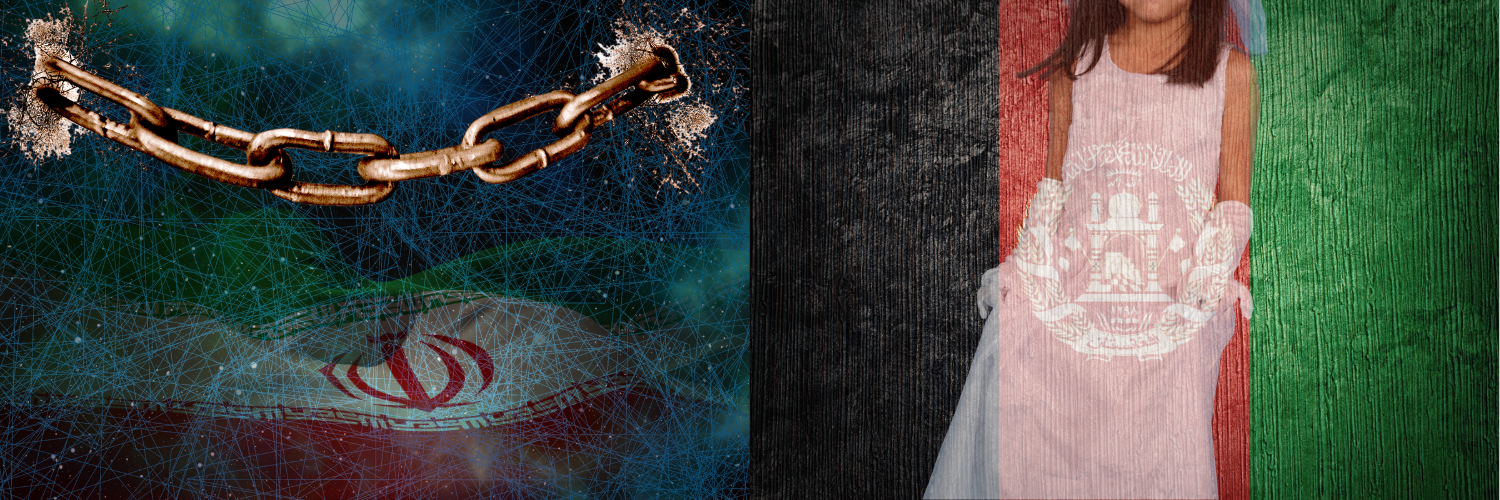
Masoud Pezeshkian, the Iranian president, has ordered the reopening of the international internet in Iran following a months-long “blackout.” This may provide some kind of lifeline to Iranians who have been in the dark since the beginning of the year or who may have family overseas. In intent, it seems to be a more comprehensive reopening than the “Internet Pro” program the regime recently unveiled, which was intended to limit economic pain by restoring access for certain business sectors.
This restoration obviously will not be the dawn of a new and freer day. The regime placed onerous restrictions on how its citizens could use the internet even before it cut off access. In the midst of a war with the United States and Israel, as well as the regime’s apparent success at surviving the most direct threat to its existence in recent history, censorship is sure to remain heavy; reports indicate that social media is still inaccessible, for example. The hope, of course, is that the people of Iran are able to use this lifeline in a renewed fight for freedom from the Islamic Republic, but the regime will do its best to make that very difficult.
In Afghanistan, meanwhile, the Taliban have issued an undisguised permission slip for child marriage. Under pre-Taliban governments, this permission extended only to marriages for girls aged 15 or over, but a new decree on divorce seems to go much further. The new regulations state that girls married before puberty have the right to seek a divorce only once they reach puberty. (It should be noted the right to “seek divorce” is different from the right to obtain a divorce, a right Muslim men unilaterally enjoy while Muslim women do not.) Thus, without issuing a decree explicitly allowing prepubescent child marriage, these new regulations allow it implicitly.
The new divorce regulations also stipulate that marriage should be “consensual.” (Never mind that a child is mentally and emotionally incapable of providing informed consent to be married.) The Taliban’s definition of consent is of course laughable: if a girl married before puberty does not raise any objections once she reaches puberty, she is consenting to the marriage. A few threats of violence from the husband might be all it takes to force her “consent.”
In their barbaric treatment of women and girls, the Taliban continue to be one of the best representatives of Islam as it is meant to be practiced on planet Earth. This is a faith which venerates a man who married a six-year-old girl and “consummated” their marriage (read: committed child sexual assault) three years later—holding him up as the infallible example whose behavior all people should emulate. This move may have been one of the least surprising things the Taliban could have done.
EXMNA Insights
Today marks World Menstrual Hygiene Day, a day meant to address the stigma and taboos surrounding menstruation. What’s often missing from these conversations is the role religion plays in shaping cultural attitudes toward women’s bodies. Islam is no exception. The Qur’an and hadith contain repeated descriptions of menstruation as impure, deficient, diseased, or the cause of spiritual inferiority. It’s hardly surprising that these ideas can shape how women themselves are viewed and treated.
Join the conversation on EXMNA’s social media channels on how Islamic teachings play a role in perpetuating stigma and taboos surrounding menstruation and women’s bodies.
Instagram Facebook BlueSky Twitter
Until next week,
The Team at Ex-Muslims of North America
P.S. We’d love to hear from you! Share your feedback at [email protected].