
Good To See You Again
This week, the hijab once again took center stage—not as a simple piece of cloth, but as a global symbol at the crossroads of secularism, religious freedom, coercion, and political identity. From protests in Montreal to policy reversals in India to Germany’s culture-war spectacle, the same question persists: where does personal liberty end, and religious or state pressure begin?
Plus: a quick reminder that EXMNA’s 3rd Annual Draw Muhammad Day Contest is still underway—submit your art, compete for cash prizes, and make your mark before the deadline.
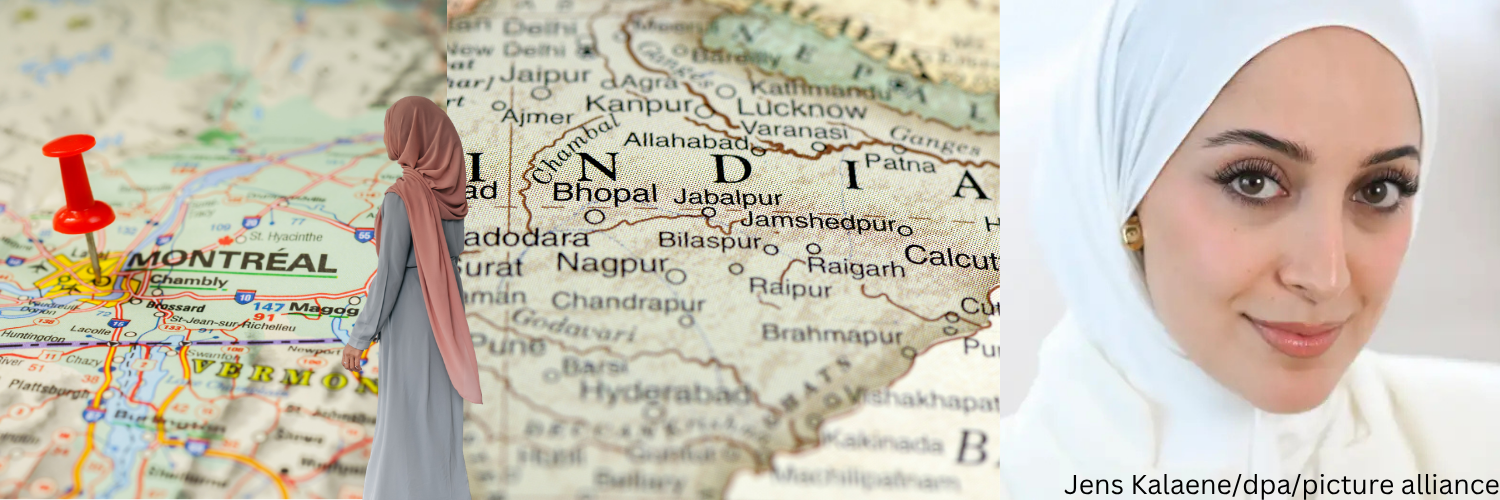
Over the past week, the hijab has once again shown it has global potency as a divisive political and religious symbol.
In Montreal, local Muslims gathered on Saturday to protest Quebec’s ever-stricter secularism laws. Members of the community lamented that the prohibition on teachers and daycare workers from wearing religious symbols prevented them from working in the jobs they wanted. Others said they were forced out of jobs they already had as these prohibitions went into effect. The bills in question, Bill 21 and Bill 94, also apply the prohibition to other school staff and parents volunteering at school.
Half a world away, the Indian state of Karnataka is taking another approach. The state had previously banned headscarves in classrooms in 2022, but it has just recently chosen to reverse that ban. Now, it will allow students to wear “limited religious or faith-based symbols,” such as the hijab, although school uniforms will remain mandatory. This might at first seem like an unusual concession to Muslim religious practices in a country that increasingly treats its Muslim minority as second-class citizens; in fact, its real motivation seems to stem from the fact that some Hindu religious forehead markings, (like tilak), became subject to the initial ban.
The question of whether to allow the hijab in educational settings is a genuinely gray area with no easy answer. In Montreal’s case, the state certainly has the right to enforce its vision of secularism, and keeping religious symbols out of schools is a valid and legitimate objective. At the same time, expecting a Muslim woman to remove her hijab on a whim may not be realistic. Stories of Muslim women who wear hijab being denied or forced out of their jobs are sad, but a true commitment to laïcité—the all-encompassing Francophone conception of secularism—may make it a necessary evil.
It’s easier to argue that Karnataka is taking the wrong approach. We can make an educated guess that the vast majority of Muslim women in India do not wear the hijab out of free choice. It is instead a habit born of religious programming that begins in early childhood. Children are unable to evaluate this choice for themselves, and in some cases, the hijab is indeed forced. While the state cannot actively interfere in private religious practices—at least, no state in a free society should—it also has no obligation to facilitate religious indoctrination in a public setting. (The same goes for Hindu indoctrination, just as much as Islamic indoctrination.) This, at least, is something Quebec had 100% right when it banned students from wearing face coverings (though the hijab and other religious attire remain permitted for students).
Finally, a piece in Deutsche Welle (DW) speaks glowingly of Büsra Sayed, the hijab-clad Miss Germany finalist who became the subject of an AfD parliament member’s ire. The fact that a Muslim woman in a hijab came close to being crowned Miss Germany certainly speaks to the changing times. The response to AfD member Beatrix von Storch’s speech criticizing Sayed was also remarkable: Sayed, who sells hijabs, found herself inundated with orders for hijabs, even from non-Muslim women and men (probably thanks in part to her announcement of a discount code, “AfD10”).
Sayed is a German citizen and has every right to participate in German cultural activities. That said, this is a repetition of an ironic dynamic we have pointed out in the past: Westerners embracing the hijab as a performative symbol of inclusion, blind to the reality that its true purpose is to induct girls into “modesty culture” and keep women in it. It is true that for some Western Muslims, the hijab has remained while other cultural restrictions on female autonomy have eased. But this does not change what the hijab actually means for the vast majority of Muslims, nor its misogynistic origins.
On the Horizon
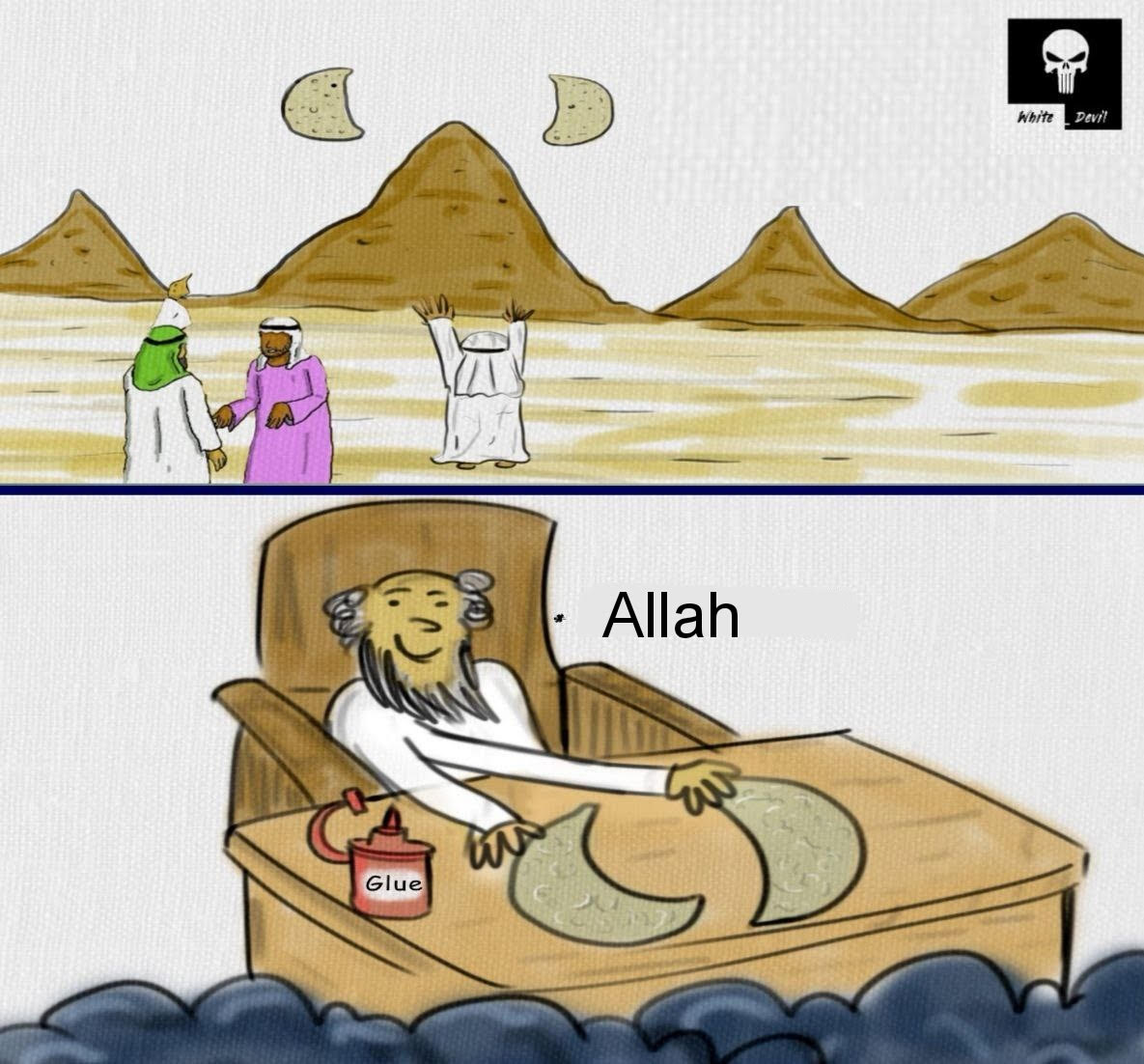
2025 2nd place winner, White Devil
A quick reminder—EXMNA’s 3rd Annual Draw Muhammad Day Contest is underway!
Submit your original artwork for a chance to win cash prizes by Sunday, May 17 at 11:59 PM ET via our Google Form.
A few key rules:
Tell us how you’d like to be publicly credited (pen names welcome!)
Clearly state whether your artwork is fully original or inspired by existing work (if inspired, credit the original artist)
No AI-generated artwork
Non-English text MUST include an English caption or translation
No sexual or violent imagery
You must attest that your submission is original
Dissent Dispatch subscribers will get an exclusive edition on 5/20 with an early look at the winners!
Until next week,
The Team at Ex-Muslims of North America
P.S. We’d love to hear from you! Share your feedback at [email protected].