
Just As Promised
This week, our Unbelief Brief looks at what happens when a regime decides its people shouldn’t have access to reality. Iran’s ongoing internet blackout is more than a wartime measure—it’s a reminder that control over information is control over thought.
We also mark Earth Day 2026 in our EXMNA Insights with a closer look at a different kind of claim to authority: the idea that scripture already contains scientific truth, and what falls apart when you actually test it.
Unbelief Brief
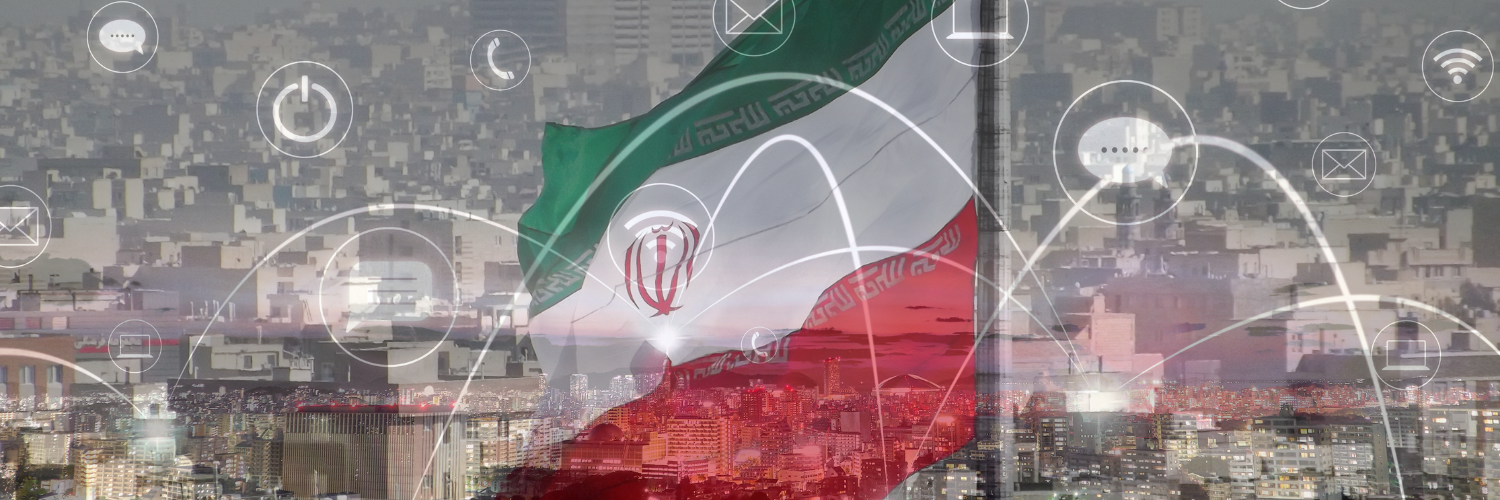
The Iranian repression apparatus remains fully operational in the midst of the US’s ongoing war with the country (lacking Congressional or UN authorization). A near-complete internet blackout, imposed by the regime in response to January’s popular uprising, is already one of the longest in history. Innocent Iranians are left to fear the dropping of bombs, relying entirely on their own murderous regime to warn and protect them from danger. They are caught between a horrific crackdown on protests that claimed 36,000 lives and the current reality of a war that threatens them every day.
The internet blackout remains mostly in place even as the regime realizes it must make economic compromises. A very limited reopening of the internet for “certain business sectors” will do very little to change the reality for everyday Iranians, who remain essentially cut off from any outside information the regime does not want them accessing. They bill this new, limited rollout as “Internet Pro,” as though it were some kind of premium subscription—a poignant flourish to the dystopian character of what is happening.
The days of optimism for a free and open global internet, spreading truth and understanding among all the world’s peoples, may now seem like a distant memory. Still, even if misinformation runs rampant and generative AI hallucinations pollute the discourse, secure and reliable internet access remains one of the most potent tools for free people to discern truth from falsehood. This is precisely why the Islamic Republic does not want it for its own people: it does not want them to be free. It wants them to remain under the boot of an oppressive and murderous theocracy.
All the while, a hopeless miasma hangs over the heads of everyday citizens going about their business in Tehran. Iranians cross the border into Turkey for fleeting internet access while mouthpieces for the IRGC threaten the digital infrastructure of the entire Gulf region who rely heavily on cables running underneath the Iranian-controlled Strait of Hormuz. Some of this may be strategic bluster in wartime, but Iran has proven in the past that it is willing to create problems for neighboring nations—all in the name of its fanatical, delusional religious ambitions.
The fog of war and repression still hangs thick, but one truth is clear: the Islamic Republic is doubling and tripling down on severe, near-totalitarian micromanagement of the citizenry. In its crusade to stop the flow of information, one wonders how long it will take before their leaders start thinking about how to prevent people from even traveling abroad.
EXMNA Insights
Earth Day is a celebration of science—of what we’ve learned about the world by questioning, testing, and revising our understanding of it.
But that process stands in direct conflict with traditions that claim to have already gotten the answers right.
Many believers are taught that the Qur’an contains advanced scientific knowledge—insights about the cosmos and human life revealed centuries before modern discovery. Yet a closer look shows something else: descriptions of a flat or “spread out” earth, meteors as a means to ward off eavesdropping genies, and embryology that reflects the limited understanding of 4th century Aristotelian theories rather than modern biology.
This matters because science doesn’t just give us facts—it gives us a method. It demands that claims about the natural world be tested against evidence, not insulated from it.
In the wake of Earth Day 2026, that distinction is worth remembering. If ideas about the world are true, they should stand up to scrutiny. And if they don’t, calling them “science” doesn’t make it so, it just lowers the standard.
And when a belief system like Islam presents its scripture as scientifically perfect, it’s not just making a claim, it’s asking to be exempt from the very process that makes real knowledge possible.
Until next week,
The Team at Ex-Muslims of North America
P.S. We’d love to hear from you! Share your feedback at [email protected].