
It’s Good To Have You Here
This week, the Unbelief Brief examines what a possible end to the US-Iran war could mean for the future of Iran. While the regime appears to have emerged stronger, its fundamental legitimacy crisis remains unresolved.
In EXMNA Insights we mark Pride Month by sharing the voices of LGBT ex-Muslims from around the world—stories of struggle, resilience, and the determination to live authentically despite immense pressure.
Unbelief Brief
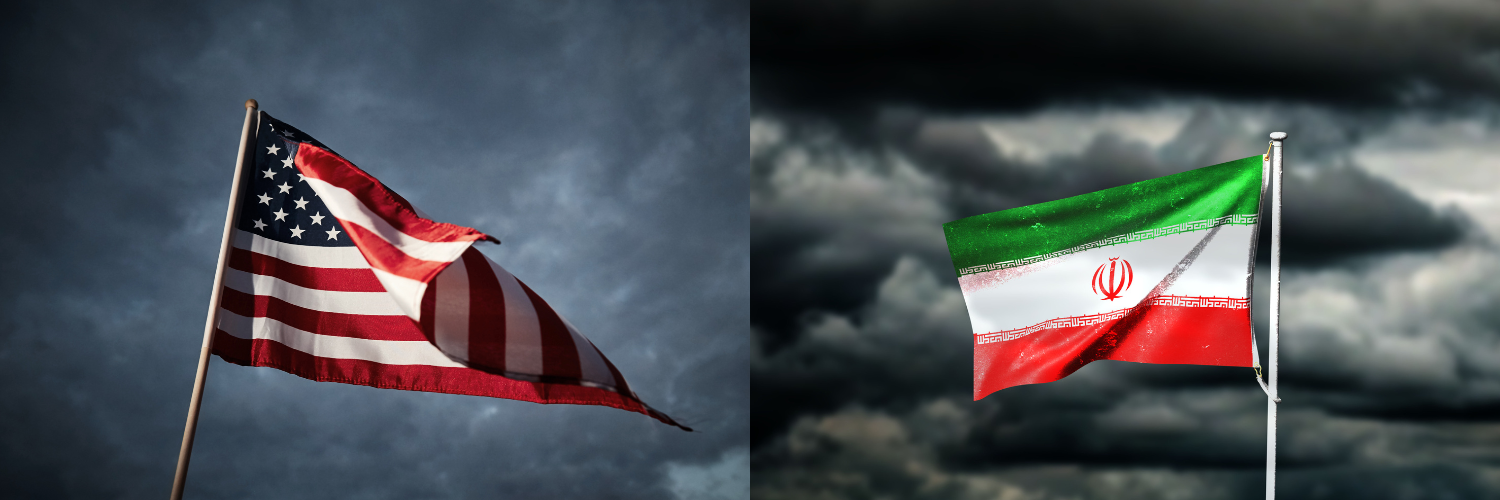
The war between the US and Iran may finally be coming to a close. The terms of the deal currently being reported, while not yet final, are remarkably favorable to the mullahs. The Israelis, who are deeply unhappy with the agreement and were not part of the negotiating process, remain a possible wildcard. However, if peace holds under these conditions and the Strait of Hormuz is reopened, Iran will emerge much more powerful than it was just a few months ago.
An analysis of the deal’s geopolitical ramifications is not ours to make. Rather, we will reflect on the implications of the war’s outcome for the future of the Iranian people, as well as the dimming hopes for secularization or regime change in the near- or medium-term.
In a process that has long been in motion but “accelerated” by the war with the US, the Iranian army’s Islamic Revolutionary Guard Corps (IRGC) has consolidated its power and influence in the country. They now appear to be the dominant force in Iranian politics, leading some analysts to speculate that a kind of transition from theocracy to military rule may be underway. This may be true in terms of which individuals and entities actually possess power (as opposed to those who hold it only nominally, as the mullahs remain in charge on paper). However, the abstract source of that power’s legitimacy remains unchanged: adherence to the principles of the Islamic Revolution. More aptly, this arrangement might be called theocracy under new management.
The people of Iran continue to suffer under the boot of a regime that was weakened earlier this year but now appears emboldened, and even revitalized, by what it sees as a triumph over its two chief adversaries. While IRGC-connected media concedes that Iran did not “win” the war, it does assert that the US and Israel have been “defeated,” because their strategic objectives remain unfulfilled. Meanwhile, the regime’s use of mass terror to control a populace that no longer views its rule as legitimate continues unabated, aided by a fragmented political opposition and the absence of a leader around whom a new uprising could rally. And with a peace agreement widely seen as a capitulation by the US, Iranians are left to confront the reality that no help is coming anytime soon.
These are bleak times, to be sure. One glimmer of long-term hope rests in the fact that the regime has not regained the consent of the governed and has no realistic path to doing so. It is reportedly already preparing for the possibility of new mass uprisings, which it will surely be prepared to quash with the same ferocity as last time. How much longer can this situation be sustained? Will the IRGC and its paramilitary allies kill every last Iranian besides the small minority of ideological hardliners?
Regardless, if this is the beginning of a new status quo, it is difficult to imagine a worse outcome for those of us who still hope for a secular and democratic Iran. The day when this becomes a reality—and we must continue to believe that the word is “when” and not “if”—will be a happy one. May the contradictions of the country’s current social and political situation plant the seeds for it.
EXMNA Insights
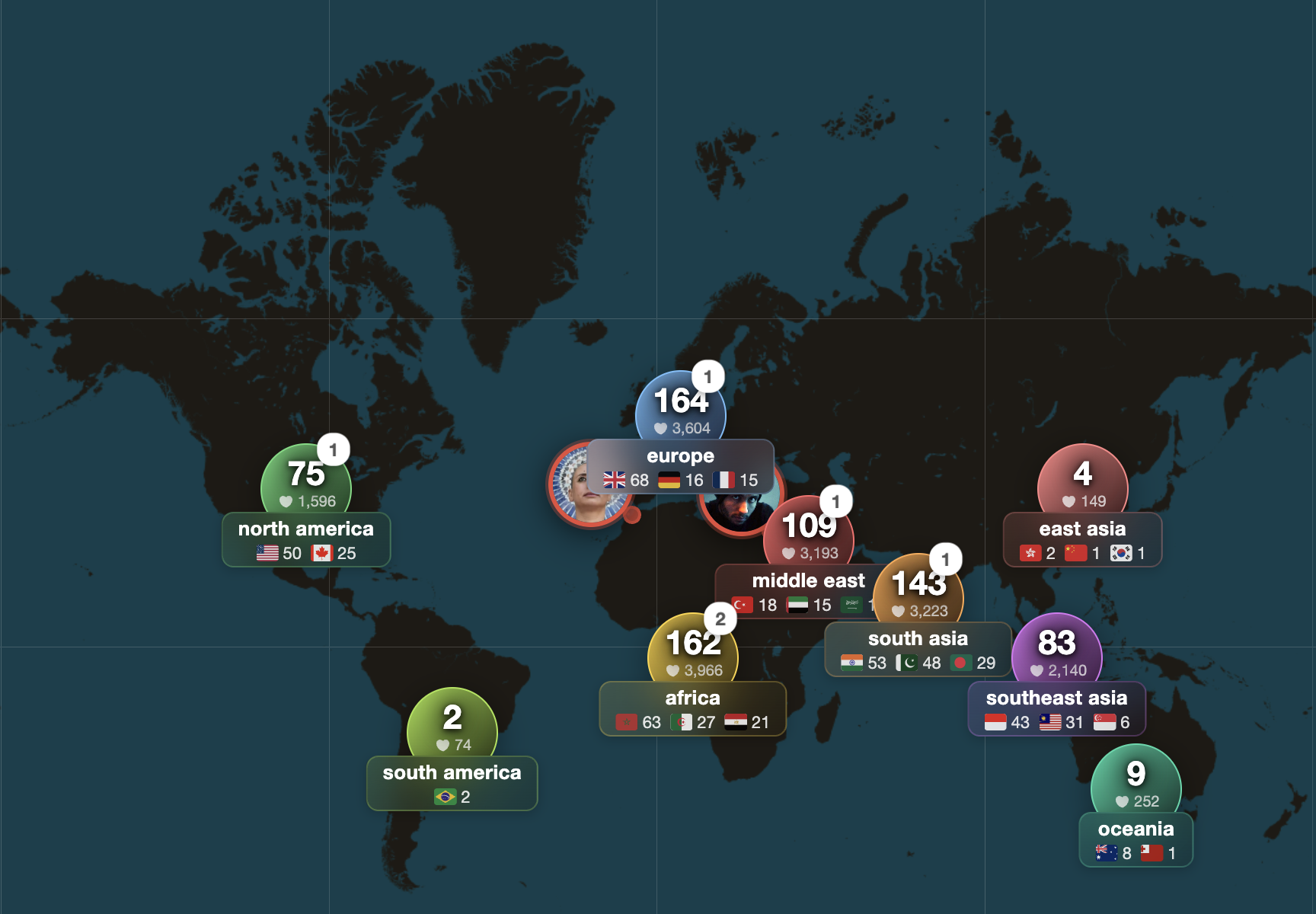
The following stories were shared by LGBT ex-Muslims on exmuslim.me. From Egypt to Nigeria, Iraq to Malaysia, they reveal both the diversity of the ex-Muslim community and the common challenges many face in living authentically.
Egypt: “I cried while praying asking god to guide me to the right path even if it hurt me.” / Iraq: I wish someone sees my message and spreads awareness about how much we suffer here in Iraq.” / Kenya: “Why do I get to be punished the same as a thief in hell yet I just love another man.” / Kuwait: “To any ex Muslims who read this, you’re not alone. You can do this.” / Malaysia: “It’s cruel to myself as a queer woman to stay on this path.” / Morocco: “I struggled with self-hatred, tried to ‘pray the gay away,’ sought conversion therapy and religious advice, terrified of hell.” / Nigeria: “Leaving Islam freed me. I finally understood there’s nothing wrong with me I’m valid just as I am.” / Oman: “I was an open ex-Muslim in Oman and got into trouble with the regime, which is why I am now writing from the UK. I am free, yes!” / Pakistan: “I started to look into Islam to find some sort of acceptance but the opposite happened.” / Turkey: “When my brother found out I was gay, he sexually abused me, and I fell into depression for years, wanted to off myself…” / Turkey: “I know that at one point in my life I will get rid of this hijab, I will be free, I will be openly gay, I will get out of this house.” / United Arab Emirates: “I couldn’t accept a religion that also rejected who i was and deemed me to be a ‘sinner’. All my beautiful complexities watered down to being a sinner.”
Until next week,
The Team at Ex-Muslims of North America
P.S. We’d love to hear from you! Share your feedback at [email protected].