
Your Weekly Update Has Arrived
This week marks our 100th edition of Dissent Dispatch. We’re extremely grateful to those of you who’ve been with us since the beginning, as well as those who’ve joined along the way. Each week, this newsletter is our way of cutting through the noise—highlighting where freedom of conscience is under pressure, elevating voices that are too often sidelined, and offering a clear-eyed, secular perspective on issues that are frequently misunderstood or avoided. As we reach this milestone, we’d love to hear from you—what’s been useful, what hasn’t, and what you’d like to see more of. Share your thoughts anytime at [email protected].
We turn to Canada, where the Supreme Court has concluded hearings on Quebec’s controversial Bill 21. At stake is more than a dress code for public employees—it’s a deeper conflict over what secularism should look like, and how far governments can go in limiting rights to enforce it.
Unbelief Brief
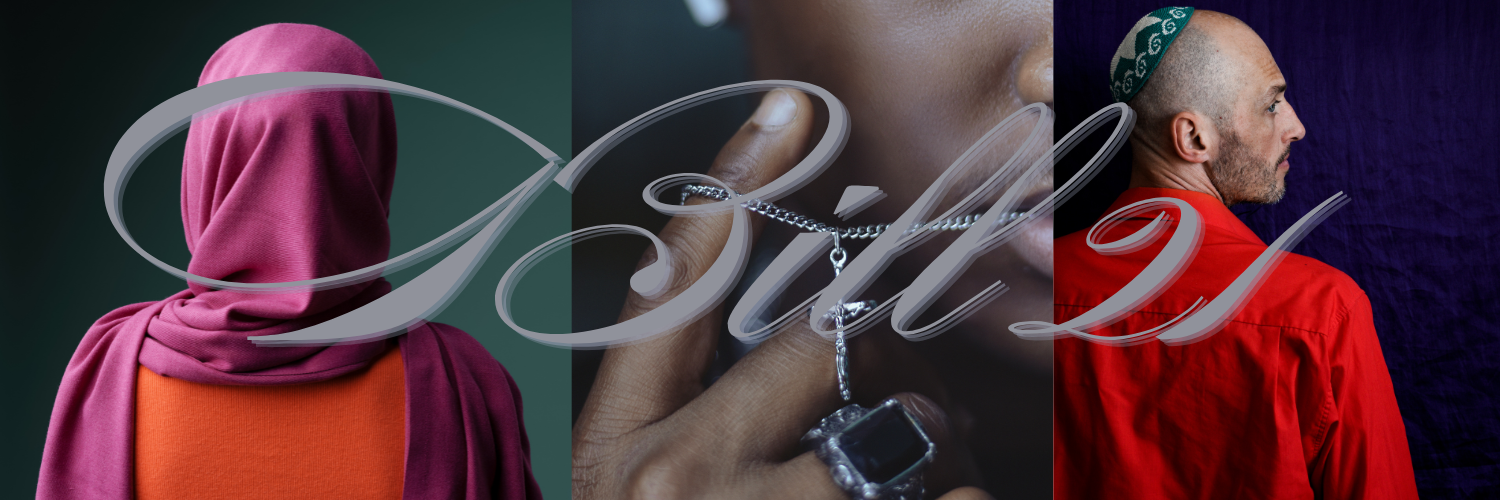
The Supreme Court of Canada has wrapped up a lengthy four-day hearing challenging Quebec’s Bill 21. This law aims to promote secularism in Quebec by prohibiting public employees from wearing religious symbols on the job. Federal prosecutors have challenged Bill 21 on the basis that it infringes on Canadians’ rights, particularly emphasizing its outsized impact on Muslim women who choose to wear the hijab.
There are actually two distinct debates here going on at once. The first is a division between Francophone and Anglophone conceptions of secularism, or laïcité in French. Quebec inherits a much stricter and more encompassing vision of secularism from France, where keeping religion entirely out of the public sphere is prized. In contrast, the English-speaking provinces view separation of church and state like most other Western countries, where a public-sector worker wearing a cross is common and unremarkable.
This tension goes a long way towards explaining the conflict between Ottawa and Quebec on this issue. Prosecutors believe that Bill 21 is inconsistent with fundamental rights in the Canadian Charter of Rights and Freedoms, including the freedom of religion and right to equality. Some of these arguments present genuinely difficult problems. Reasonable people can view an outright prohibition on wearing religious attire as a bridge too far, since many view it as a fundamental obligation (even if, in our view, a wrongheaded and nonsensical one). Other arguments, like the idea that the law attacks Canadians’ equality under the law, are clearly meritless. The law applies to all religions equally and makes no distinction between a yarmulke, a turban, and a hijab.
However, underneath the secularism debate is a legal one. When it passed Bill 21, Quebec invoked the Charter’s “notwithstanding clause,” a provision in the Charter which allows provincial governments to enact laws that violate certain other Charter rights. This includes the rights under scrutiny in this case. Prosecutors have raised the argument that future authoritarians could take advantage of the notwithstanding clause to seriously limit human rights in Canadian provinces. While Canada has lived with this possibility until now without much issue, it alarms even British Columbia’s Humanist Association, who argue that Quebec’s interpretation of the clause is too broad.
Other Canadian provincial authorities are largely aligned with Quebec on the preference for a strong notwithstanding clause. Canadian legal experts’ consensus is that the Supreme Court is unlikely to strike Bill 21 down: ultimately, it looks like a legally legitimate application of the notwithstanding clause, even if it is found to violate the Charter rights in question. However, the Supreme Court’s ruling is not expected for many months at least. Until then, we can only be patient.
Until next week,
The Team at Ex-Muslims of North America