
Back In Your Inbox
This week in our Unbelief Brief, we’re looking at how dissent continues to be suppressed on the global stage, from the United Nations Human Rights Council to states that criminalize disbelief under softer language.
In EXMNA Insights, we close out our Women Islamic History Couldn’t Contain series with its final installment, featuring artwork by SunLazurine and the story of Taj ul-Alam—a ruler who defied expectations, and a legacy that challenges them still.
Unbelief Brief
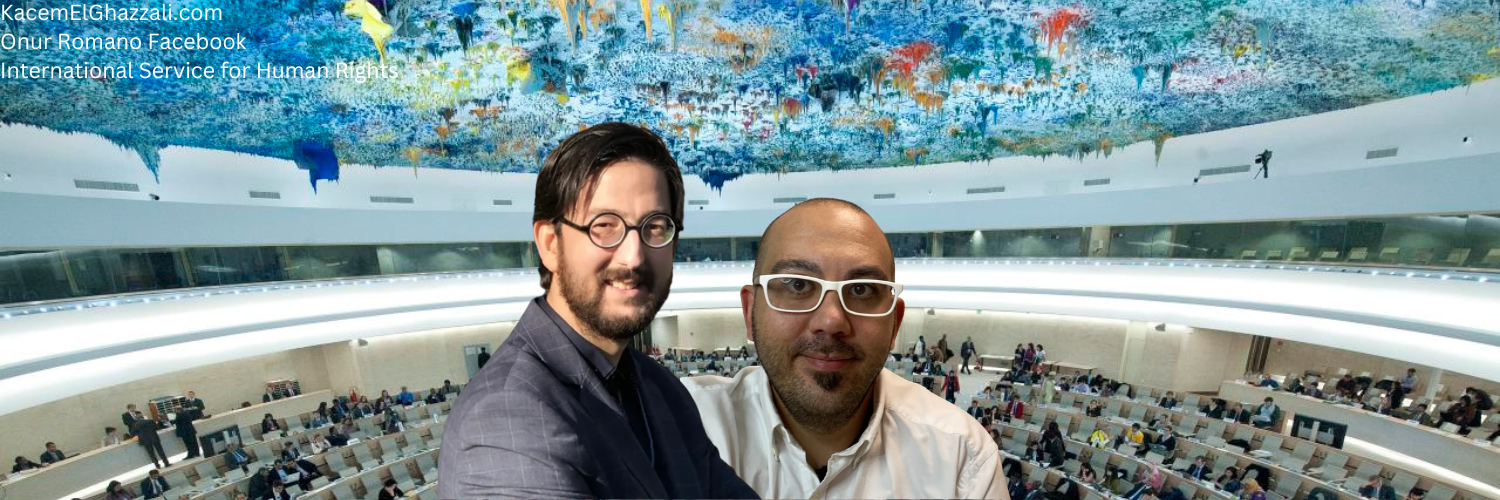
The 61st session of the United Nations Human Rights Council has been underway for the last month and now nears its close at the end of March. During the session, representatives from secular organizations delivered remarks focusing on how the freedoms of conscience and expression are stifled and brutally repressed by Islamic states.
Representative for the Center for Inquiry (CFI), Kacem El Ghazzali, delivered a statement in Arabic condemning the Organization of Islamic Cooperation (OIC) for “attacks on free expression.” El Ghazzali blasted the OIC, made up of 57 predominantly Muslim countries, for masking repression of dissent behind the guise of “protecting religion from defamation.” We have long sought to raise awareness of how even the more “secular” Muslim-majority countries implement blasphemy laws by different names, using euphemistic phrases like “hurting religious sentiments” in order to legitimate arrests and imprisonments.
Indeed, while countries like Iran and the Maldives prescribe the death penalty (against which Humanists UK also protested), countries such as Bangladesh and Turkey employ subtler means. Onur Romano, a representative for Humanists International and Turkey’s Association of Atheism, spoke against the Turkish government during the session as well, labeling it “a state that criminalizes disbelief.” While Turkey has not yet resorted to executing people for blasphemy, Romano cites a litany of arrests from recent years which make it clear that Turkish authorities tolerate no public criticism of religion. Humanists International also spoke in favor of the need to preserve “secular, rights-based education,” as well as the need to ensure freedom of religion or belief (FoRB) applies to the non-religious as well.
Lastly, an opinion piece in Iran International by Arash Sohrabi argues that we are currently witnessing an accelerated process of regime collapse in Iran. Sohrabi believes that the Iranian state is currently in a stage of “failed restoration of authority,” which follows the loss of popular legitimacy in the life cycle of authoritarian states. We are hopeful that his analysis proves accurate. Read the article here.
EXMNA Insights: Women Islamic History Couldn’t Contain

Artwork by: SunLazurine
In 1641, a woman ascended to the throne of the Indonesian sultanate of Aceh: Taj ul-Alam. By this point in history, female rulers of Islamic states had been rare, but not unheard of. Figures like Shajar al-Durr of Egypt, Razia Sultana of Delhi, and Khadijah of the Maldives had all proven their worth as Muslim leaders in their own ways. But there was one caveat: the further away they were from Islam’s historical centers, the less controversial their rule was.
Taj ul-Alam was no exception, and like the women who blazed trails before her, she put the lie to Muhammad’s declaration: “Never will succeed such a nation as makes a woman their ruler.” It seemed, in fact, that a female ruler may have been just what Aceh needed. The sultana was widely praised for her honorable and virtuous qualities. Visitors to her sultanate, previously known as a land of persistent tumult and upheaval, wrote that it was remarkably tranquil and well-administered under her direction, as well as the three sultanas who succeeded her.
Under this line of female rulers who presided over Aceh until the end of the 17th century, the sultanate did lose some of its imperial holdings. However, this came in the context of increasing encroachment from the Dutch East India Company, who were eager to carve up this part of the world for themselves. In a time of external pressure and turmoil, Aceh remained internally peaceful and held onto its independence as a sovereign state.
The question of how a Muslim society could choose a woman as its ruler, even in direct defiance of Muhammad’s guidance, has long puzzled scholars and theologians. For example, when Arwa al-Sulayhi rose to the throne in Yemen, one argument emerged as to how a woman—all of whom were supposedly deficient in intellect and piety by Muhammad’s declaration—could possess such admirable wisdom and virtue: she must have “spiritually” been a man at heart. In Taj ul-Alam’s case, historians have speculated that Indonesian culture may have played a role, acknowledging a legitimacy to female succession that most of the Muslim world lacked.
But the contradictions could not last forever. Zainatuddin, the last Aceh sultana, abdicated the throne in 1699. A fatwa from Mecca was the apparent catalyst, forcing Zainatuddin to give up power on the grounds that women were not fit to rule.
While the authenticity of the fatwa is debated, there is certainly historical precedent for such a move. The caliph in Baghdad had forced Shajar al-Durr to abdicate for the same reason centuries prior. Never mind the consensus that Aceh had flourished under these women; they were still tainted by the curse of their sex.
Thus, male leadership of Aceh resumed, the sultanas’ rule becoming a historical blip. But those women would leave a signpost for future historians: direct evidence that Islam’s long-dead prophet was, in fact, wrong about the purported inferiority of women.
Until next week,
The Team at Ex-Muslims of North America
P.S. We’d love to hear from you! Share your feedback at [email protected].