
Welcome Back
This week our Unbelief Brief unpacks the Trump administration’s portrayal of Nigeria’s violence as a one-sided “Christian genocide,” a framing that obscures state collapse, criminality, and the shared vulnerability of Christians and Muslims alike. We also turn to the UK, where a proposed definition of anti-Muslim hostility risks chilling legitimate criticism of religion.
Our Guest Dispatch features a piece from Nigerian humanist and secular activist Mubarak Bala. It traces the roots of Nigeria’s instability to colonial appeasement, religious entrenchment, and the long marginalization of secular voices.
Unbelief Brief
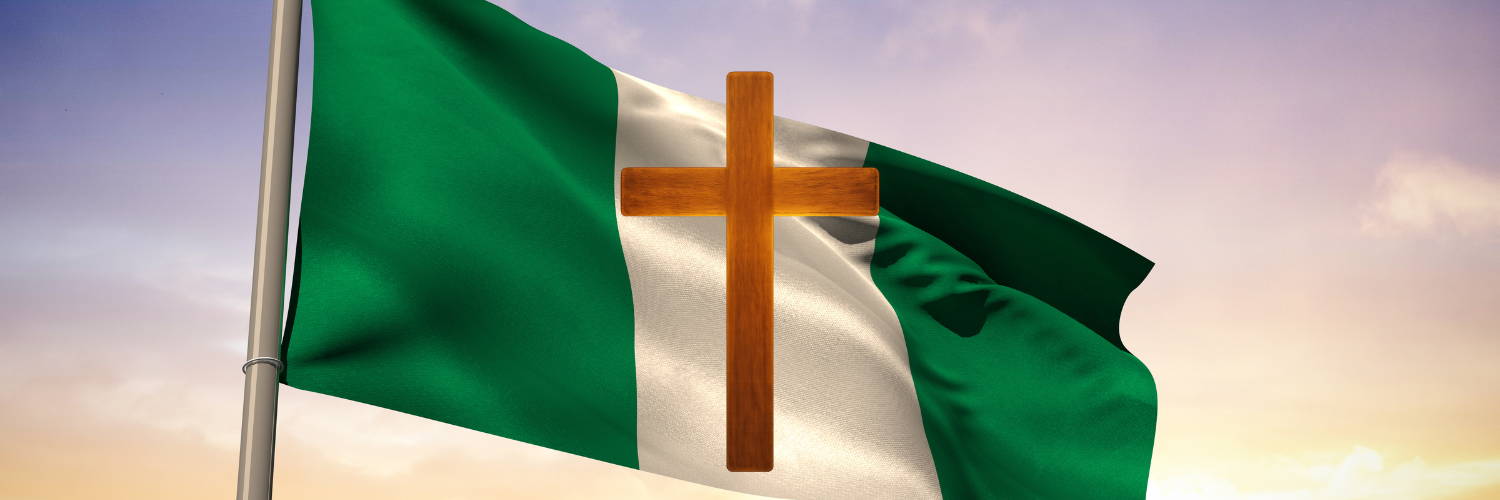
The Trump administration’s fixation on a supposed “Christian genocide” in Nigeria reduces a complex security crisis into a sectarian narrative where only one category of victim is allowed to matter: Christians. Nigeria is not experiencing a one-directional religious war but a collapse of state security, in which jihadist groups, criminal gangs, and militias exploit weak governance and near-total impunity.
The unfortunate truth is that Christians and Muslims alike are targets of this violence. Entire communities are attacked not due to theology alone, but because decades of political failure, poverty, and insecurity have left them vulnerable to violence and exploitation by religious extremists. The administration’s refusal to acknowledge this reality, and its insistence on framing the crisis as a religious crusade, is a deliberate distortion that seeks to inflame tensions while obscuring the real drivers of instability. Nuance, however, has no place in the right’s binary worldview, where Christian suffering demands recognition and all other suffering is deemed irrelevant.
Meanwhile in the UK, a Muslim-led interfaith dialogue group warned that Labour’s draft definition of anti-Muslim hostility is so vague it risks chilling lawful criticism of religion by collapsing critique of Islam into hostility toward Muslims: “Prejudicial stereotyping’ is extremely vague terminology which would be subject to broad interpretation. It is not difficult to see how criticism of halal slaughter, gender segregation or face coverings, all legitimate matters of public debate, could be captured by this definition leading to a chilling effect on free speech.” On that point, they are entirely correct.
Guest Dispatch

This week’s Guest Dispatch is written by Mubarak Bala, a Nigerian humanist and President of the Humanist Association of Nigeria. Bala spent nearly five years imprisoned on a blasphemy charge for expressing nonreligious views—an ordeal that drew international attention to Nigeria’s blasphemy laws and the dangers faced by religious dissenters and ex-Muslims. His writing reflects the real-world cost of policing belief, and the urgent need to defend freedom of conscience and expression.
As a creation of the British Crown during its Empire’s expansion, Nigeria could and should have been a truly secular entity. Yet the British, informed by volatile experiences with Islam in the past, took an approach that aimed to preserve the religious and ethnic status quo. Seeking to avoid communal clashes and pogroms along tribal and religious lines, the Crown effectively banned conversions from Islam to Christianity, introduced separate penal codes for the Muslim-majority north, and granted deference to Islamic religious customs. Contrary to its goals, this appeasement only amplified ethnic and religious divides, hindering national cohesion and laying the groundwork for civil war after the British departed. The Nigeria project failed before it even took off.
Divided sharply between a Muslim-majority north and Christian-majority south, Nigeria is a country where tribal and religious identity take precedence over national development. The nation is bound to fail: it is a mathematical certainty, a matter of “when” and not “if.” Given its extreme poverty and educational deficits coupled with high birth rates, this may happen in our lifetimes. Only a dramatic shift among the citizenry, such as the adoption of secular values, the redefinition of the constitution, or a referendum on the system of governance can prevent it.
For us, the secularists, effecting this change has been the biggest challenge over the decades, especially given that we are a small minority with an ever feebler voice. For most Nigerians, rationalism is abhorrent, dissent is punished, and conventional wisdom runs opposite to the facts on the ground and the nation’s trajectory. We may never be heard, at least not until it is too late. Yet we continue to strive and use every resource at our disposal to engage in advocacy—to amplify and draw attention to the matters that should be at the center of the national discourse.
Despite the grim picture, there is evidence of progress. Secular activists have made effective use of the internet, paving the way for opportunities to network beyond the country and influence international diplomats and lawmakers. We are living through a huge awakening of the newer generation of citizens, who are more educated, more versed with modern means of communication, and fed up with the prevailing conditions and the glaring failures of the status quo.
It is indeed evident that we have tamed the decades-long trend of clerical advocacy mainstreaming theology into the national discourse. Likewise, jihadists’ online recruitment campaigns aimed at young people, aided by cultural tolerance of extremism in the broader Sahel region, have been effectively frustrated. Online, young Nigerians challenge, question, and confront ideas—unheard of a generation ago. The clerical class, accustomed to a world where their word is revered and unquestioned, now tread with caution and complain of a lack of respect for spiritual authority. They blame social media or the devil for corrupting the minds of the youth.
Yet mountains must still be moved if Nigeria is to avoid repeating the mistakes of the past. And in the meanwhile, Nigerian states must continue to navigate ethnic and religious minefields on a daily basis just to avoid collapse—hindering the work of national development that must be done if the country is to have any future.
Until next week,
The Team at Ex-Muslims of North America
P.S. We’d love to hear from you! Share your feedback at [email protected].