
It’s Great To See You
This week’s edition of Dissent Dispatch spans three fault lines where freedom of conscience is being tested in real time. Our Unbelief Brief begins in London, where the British High Court is weighing whether political protest can be recast as “disorderly” conduct to punish blasphemy in all but name. It then turns to Bangladesh, where election results offer cautious hope for secularists—tempered by the enduring strength of Islamist politics and reports of intimidation. Finally, in Nigeria, our Guest Dispatch is written by Mubarak Bala, president of the Humanist Association of Nigeria, who spent nearly five years imprisoned on a blasphemy charge. Drawing on his firsthand experience, Bala outlines the constitutional reforms and political resolve needed to secure a truly secular future. Across continents, the same question persists: will governments defend the right to dissent, or yield to those who would criminalize it?
Unbelief Brief
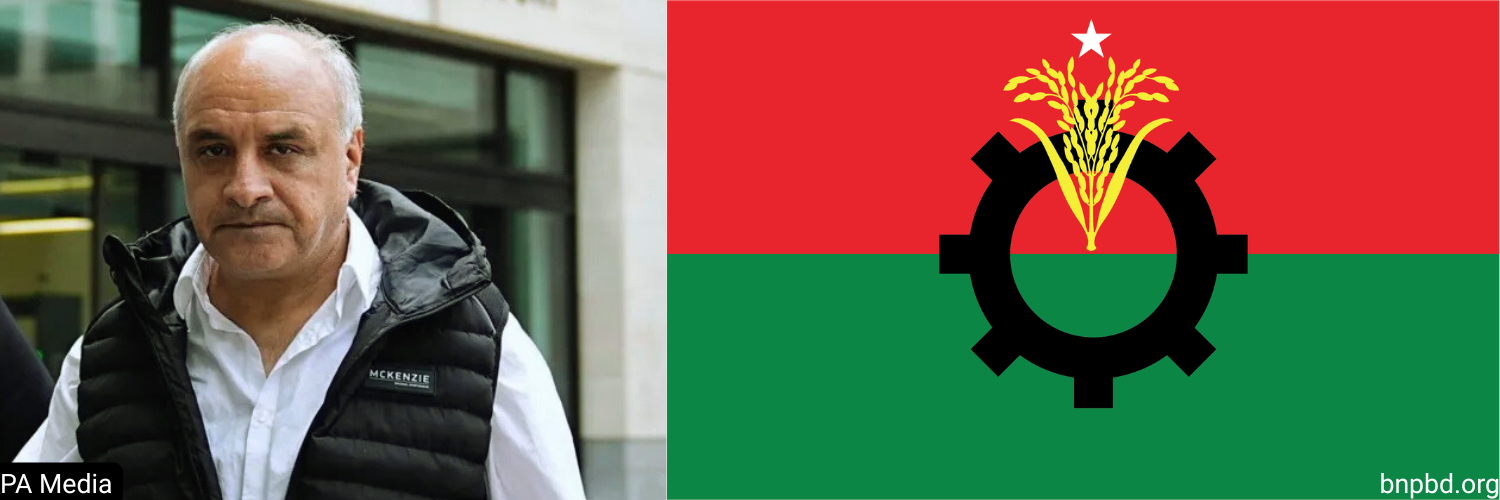
On Tuesday, the British High Court heard the Crown Prosecution Service’s (CPS) appeal of Hamit Coskun’s acquittal. After burning a Qur’an outside the Turkish Embassy in London, Coskun was initially charged with harassment towards the “religious institution of Islam,” though this was later changed to a charge of mere “disorderly conduct” following public outcry from free speech advocates. Both charges amount to little more than accusations of blasphemy by a different name. An initial conviction on the latter charge gave way to a reversal and acquittal on appeal, but the CPS has been relentless in its quest to punish Coskun’s political speech.
For the moment, judgment has been withheld, but a ruling is expected soon. Coskun, who applied for asylum in the UK in order to escape Turkey’s Islamist-leaning government, now says he faces the prospect of being forced to seek asylum from the UK to the US. The British claim to freedom of expression will only be further delegitimized if Coskun’s acquittal is not upheld. The fact that a man who attacked Coskun with a knife during his protest received no jail time adds additional disgrace. The CPS has even argued that Coskun’s behavior must have been “disorderly” because of the fact that someone was “provoked” into attacking him. The attacker has maintained that his assault was intended as a defense of his religion—a fragile religion indeed, if it cannot withstand the burning of one copy of a book.
Meanwhile, the first elections in Bangladesh following the 2024 revolution which deposed Sheikh Hasina have concluded, resulting in a victory for the Nationalist Party. Secularists can be happy about the defeat of Jamaat-e-Islami, the Islamist party. However, premature celebrations should be avoided. Would-be theocrats still received nearly one-third of the vote, finishing second behind the Nationalists, who ended up just shy of an absolute majority of the vote share.
While results largely aligned with the final opinion polls, the election also saw allegations of fraud, voter intimidation, and violence from multiple parties. These are not necessarily the makings of a stable secular democracy. While supporters of secularism and freedom of conscience can be hopeful about Bangladesh’s future, that hope must be tempered by an acknowledgement that the country’s social and political problems have not simply disappeared. And an Islamist government is still a possibility when the next election comes around if the new government becomes unpopular.
Guest Dispatch

Mubarak Bala, president of the Humanist Association of Nigeria, spent nearly five years imprisoned on a blasphemy charge for a Facebook post. Now free, he argues that Nigeria must pursue constitutional reform and confront religious extremism if it hopes to secure a genuinely secular future.
If Nigeria is to be truly secular, concrete steps must be taken. First, the constitution must be revised and ambiguities eliminated. When theocracy creeps in, the judiciary should be the first voice to declare it as unconstitutional. Protections against blackmail must also be implemented: currently, media establishments are raided and bombed if they criticize religion, and many journalists have been killed or exiled for reporting on Sharia or Islam.
The bane of Nigeria is that most or all policies are first channeled through religious prisms to determine whether they fit northern (Islamic) sensibilities. For example, the Supreme Council for Islamic Sharia is adamant that the current umpire appointed to run the 2027 presidential election is biased against Muslims—because he co-signed a paper against jihadi extremism and civilian killings. To the Council, this is evidence that he hates Muslims and therefore cannot fairly administer the election. These are the same people who supported ending the tradition of appointing a Christian as vice president if the president is a Muslim: Muslims now occupy both positions, a pathway to a politics resembling Sudan’s, which led directly to that country’s decades-long civil war and the subsequent secession of the non-Arab south.
This appeasement of the Muslim-majority north, and the imposition of its will on the rest of the country, must end. Thus, a referendum to enshrine self-determination for all groups in the nation should follow the constitutional reform. This referendum would allow individual states to determine whether they want Islamic symbols on national monuments and emblems. It should allow for a government and political system without Islamic influence, leaving non-Muslims free to live according to their own belief systems rather than Sharia.
In fact, the further away Nigeria drives itself from political Islam, the better. Today, some clerics are openly against waging war on jihadists or even labeling them as terrorists. This is what crippled the effort to address the problem two decades ago, when Boko Haram could have been fought in its infancy: it would have meant non-Muslims killing Muslims. The issue’s sensitivity caused inaction and paralysis. Now, Boko Haram is a powerful force that has invited ISIS, Al-Qaeda, JNIM, and many other regional terror groups into the country.
In other words: political reforms will be useless as long as leaders continue to walk on eggshells on issues affecting Muslims. Reforms must be accompanied by the cultural and political will to defeat jihadists on the battlefield, no matter how loudly the hardline clerics complain. This, more than anything else, may be the most important element in ensuring a free and secular future for Nigeria.
Until next week,
The Team at Ex-Muslims of North America
P.S. We’d love to hear from you! Share your feedback at [email protected].