
We’re Glad You’re Here
This week, we’re launching the first installment of our Women’s History Month EXMNA Insights series, “Women Islamic History Couldn’t Contain.” Across four Sundays this month, we’ll be debuting original artwork by ex-Muslim artists highlighting women whose lives and legacies pushed beyond the limits imposed by Islamic tradition and historical narrative. This week’s piece comes from an ex-Muslim painter, Raghed Rustom, whose work sets the tone for the series: visually reclaiming stories that are often flattened, sanitized, or forgotten. We’ll be unveiling the artwork and exploring the history behind it on our social media this Sunday, on International Women’s Day—so keep an eye out as the series begins.
This week’s Unbelief Brief examines the uncertain aftermath of Iran’s Supreme Leader Ali Khamenei’s assassination, the fragility of the Islamic Republic, and the dangerous role religious belief continues to play in global conflict. It also highlights a rare piece of good news for free expression: a court victory in the UK for Hamit Coskun, who was cleared once again after burning a Qur’an in protest.
Unbelief Brief
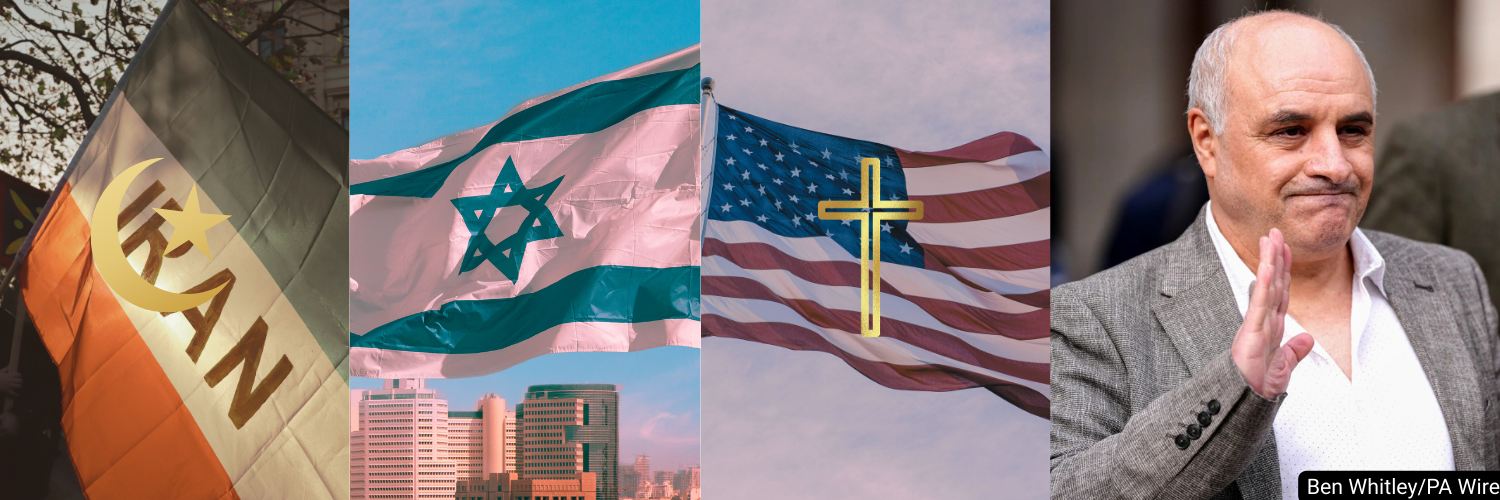
In the opening days of the United States’ war with the Islamic Republic of Iran, Supreme Leader Ali Khamenei was assassinated. As Ruhollah Khomeini’s successor, he solidified a budding theocracy and all the injustices that entailed, from placing repressive dress codes on women to executing religious and political dissidents. More recently, he presided over one of the most brutal crackdowns of any state in recent memory, where more than 36,000 Iranians were killed. For the last few years, since the police murder of Mahsa Amini for the crime of not completely covering her hair, the regime has feared and fought for its survival.
The future of the regime remains unclear, but it is still intact. How the conflict itself will unfold is similarly uncertain. Already, there has been a possible act of terrorism on US soil, apparently in Iran’s name. Turkey, a member of NATO, was reportedly targeted with an Iranian missile, which NATO air defenses shot down.
As one of the worst, most oppressive examples of Islamic theocracy on the planet, we have no love for the Islamic Republic, nor do we mourn Khamenei’s passing. The world is better off without him, even with the caveat that we don’t know what comes next. Our hope remains for a secular, democratic Iran with self-determination for its people—no theocracy, no monarchy.
At the same time, it’s worth stepping back to see the violent irrationality inherent in all Abrahamic religions. It seems every faction in this fight is motivated by hallucinations of divinity and apocalypse. American officials have spoken of Israel’s conflicts with its neighbors in explicitly Biblical terms. Israeli Prime Minister Netanyahu recently likened Iran to the Amalekites, an archetypal enemy of the Jewish people from the Hebrew Bible.
Iran, of course, is animated by a more intense religious frenzy than most American or Israeli leaders. But religious delusions still play far too much of a role in decision-making for all three powers. The first motivations behind the US and Israeli strikes are undoubtedly geopolitical; plenty of other commentators are opining on the wisdom and morality of the attacks, and that is not our role. But the secondary supernatural motivations have undoubtedly helped shape the geopolitical contours. Would the same animosities between the Islamic Republic of Iran, the Jewish state of Israel, and the majority-Christian but secular US exist, if not for religion? It doesn’t seem likely. More than a thousand are now dead, and that number is sure to climb.
In a week of so many consequential events, it’s been easy to lose track of what’s going on outside Iran. But there is some good news: Hamit Coskun, the man who burned a Qur’an outside the Turkish embassy in London, has again been cleared of wrongdoing, despite the Crown Prosecution Service’s determination to convict him for exercising his right to free expression. This is a major victory in a country where free expression faces increasing threats from illiberal forces, and those who care about secularism and free speech should not hesitate to celebrate it.
EXMNA Insights: Women Islamic History Couldn’t Contain
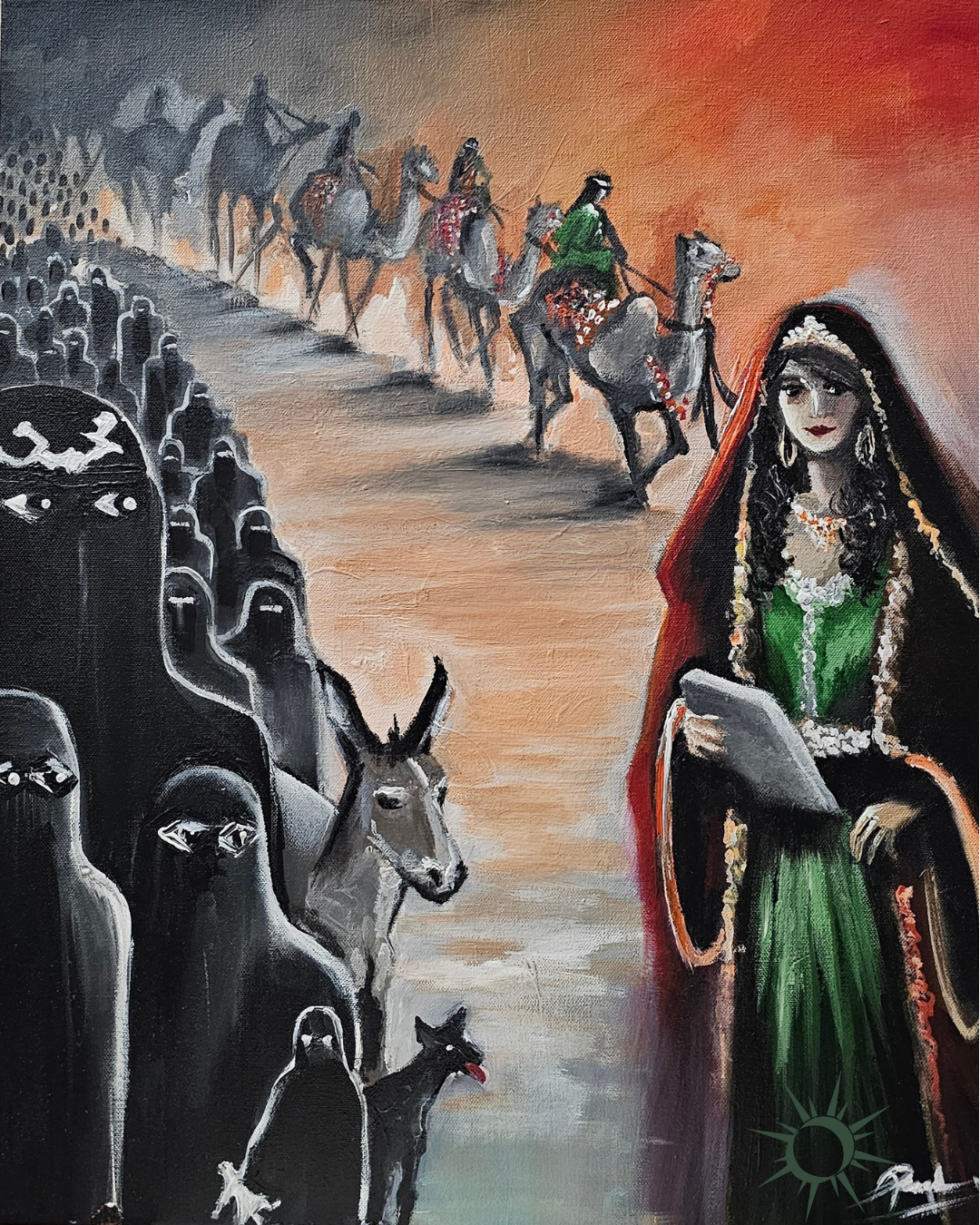
Artwork by: Raghed Rustom
Muslims revere Khadijah bint Khuwaylid, Muhammad’s first wife, as the first to accept the message of Islam. But they seldom stop to notice the contradictions in their faith that she lays bare.
Khadijah was a wealthy and successful businesswoman of the Arabian peninsula, managing an empire of trading caravans and making a living for herself on her own terms. It is said that her first encounter with Muhammad, who was supposedly 15 years her junior, occurred when she was around 40 years old. Muhammad joined her caravan as an employee, and the story goes that she was so impressed with his work that she took him under her wing. The two would go on to marry.
Muhammad’s life before and after Khadijah’s death exposes a revealing dichotomy. A woman more successful than him saw value in a young man who had made no name for himself whatsoever, offering him financial and emotional support. Indeed, if not for Khadijah, Islam itself may never have existed. When Muhammad fretted about his message from the archangel Gabriel, worrying that he had gone insane, Khadijah was the first to assure him that his revelation was real.
Yet after Khadijah’s death, Muhammad apparently lost his taste for monogamy, taking multiple wives (including, infamously, the six-year-old Aisha). These women were subject to all-encompassing restrictions on their sovereignty, autonomy, and freedom of movement. Where Khadijah ran a successful, gulf-spanning business enterprise, Muhammad’s later wives were confined to the home, speaking to other men from behind curtains, the original hijab.
Today, the repressive regulations applied to Muhammad’s later-life wives extend to all Muslim women. Their “curtains” are their head coverings or face veils. This is, by all accounts, by the decree of the prophet himself. What would Khadijah, who so valued her own agency and freedom, think of the religion her husband built, of which she is now known as the first adherent? How would she react to the knowledge that today, hundreds of millions of women are oppressed in her husband’s name—even in her own name?
We can, of course, never know. But both Khadijah and her husband left behind a historical record and legacy. Khadijah supported her previously unremarkable husband with the financial resources she had accrued as a free woman—and he repaid this kindness with mass subjugation once he was the one with power.
Until next week,
The Team at Ex-Muslims of North America
P.S. We’d love to hear from you! Share your feedback at [email protected].